One Language Before the Flood
The Scriptures teach that Hebrew was in use even before the Flood.
As one example, the Spirit of GOD had Moses record the words Eve used when she named her sons. She called one son Cain (Qayin in Hebrew) because she had acquired a son from GOD. The name Qayin comes from the Hebrew word for acquired, which is qanah. She called another son Seth (Sheth in Hebrew) because GOD had appointed another son for her. The name Sheth comes from the Hebrew word shith which means appointed.
There’s also Noah, who was named for the comfort he would bring. Noah’s name in Hebrew is Noach, and his name comes from the Hebrew word nacham which means to comfort.
Cain, Seth, and Noah were all given Hebrew names with Hebrew meanings, and this was before the Tower of Babel, when only one language existed on the earth (Genesis 11:1). If men had Hebrew names with Hebrew meanings before the Flood, it stands to reason that the one language that existed before the Flood was Hebrew.
New Languages at the Tower of Babel
It’s written that at the Tower of Babel (c. 2430 BC), GOD looked on man who was of one speech and one set of words, and HE mixed up their sounds so they couldn’t understand one another, and so they could not act in one accord, because their plans and their ways were not His.On that day in Babel, GOD created the various languages of mankind. The descendants of Shem were chosen to keep the original language from before the Flood because Father knew that one day, HE would task them with writing down His words for the whole world to read.
How Our English Alphabet Derives From the Hebrew Alphabet
When Israel was delivered from Egypt (c. 1493 BC), Father instructed Moses to write down His words (Exodus 34:27) and HE commanded the people of Israel to read and write His words (Deuteronomy 6:9, 17:18, 31:11). By this, we know that when Joshua and the 12 tribes of Israel arrived in the Land, they were able to read and write.
During Israel’s first few hundred years in the Land, the nations around them lost their ability to write as a result of what historians call the Late Bronze Age Collapse (c. 1200 BC) and Greek Dark Ages (c. 1180 BC-800 BC).
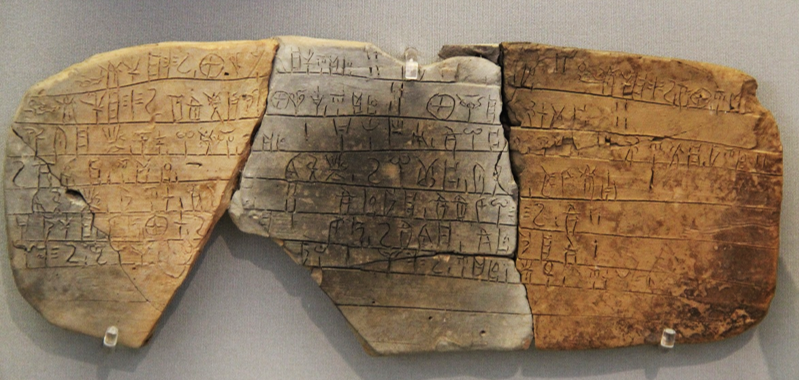
In those days, Israel’s neighbors were merchants who ended up adopting and spreading the Hebrew alphabet as they sailed around the world for trade.
History gave the merchant-neighbors of Israel the name “Phoenicians” and that’s why it’s still sometimes (mistakenly) taught today that the Phoenicians invented the alphabet.
It was from the Phoenicians that the Greeks learned the letters, and since Greece had lost the ability to write in their own ancient script as a result of the collapse, they adopted the Hebrew letters as their own.
Greek historian Herodotus noted in his Histories:
“As time went on the sound and the form of the letters were changed. At this time the Greeks who were settled around them were for the most part Ionians, and after being taught the letters by the Phoenicians, they used them with a few changes of form. In so doing, they gave to these characters the name Phoenician, as was quite fair seeing that the Phoenicians had brought them into Greece.”
By the time the Phoenicians adopted and spread the Hebrew alphabet, Israel was using a version of the original pictographic letters from Father that was faster to write.
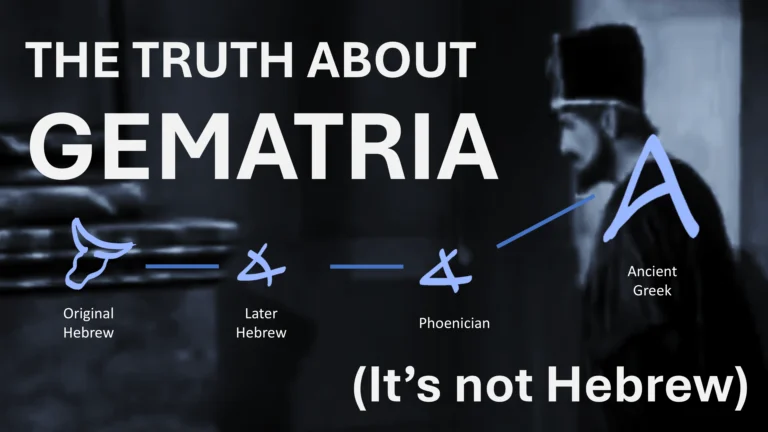
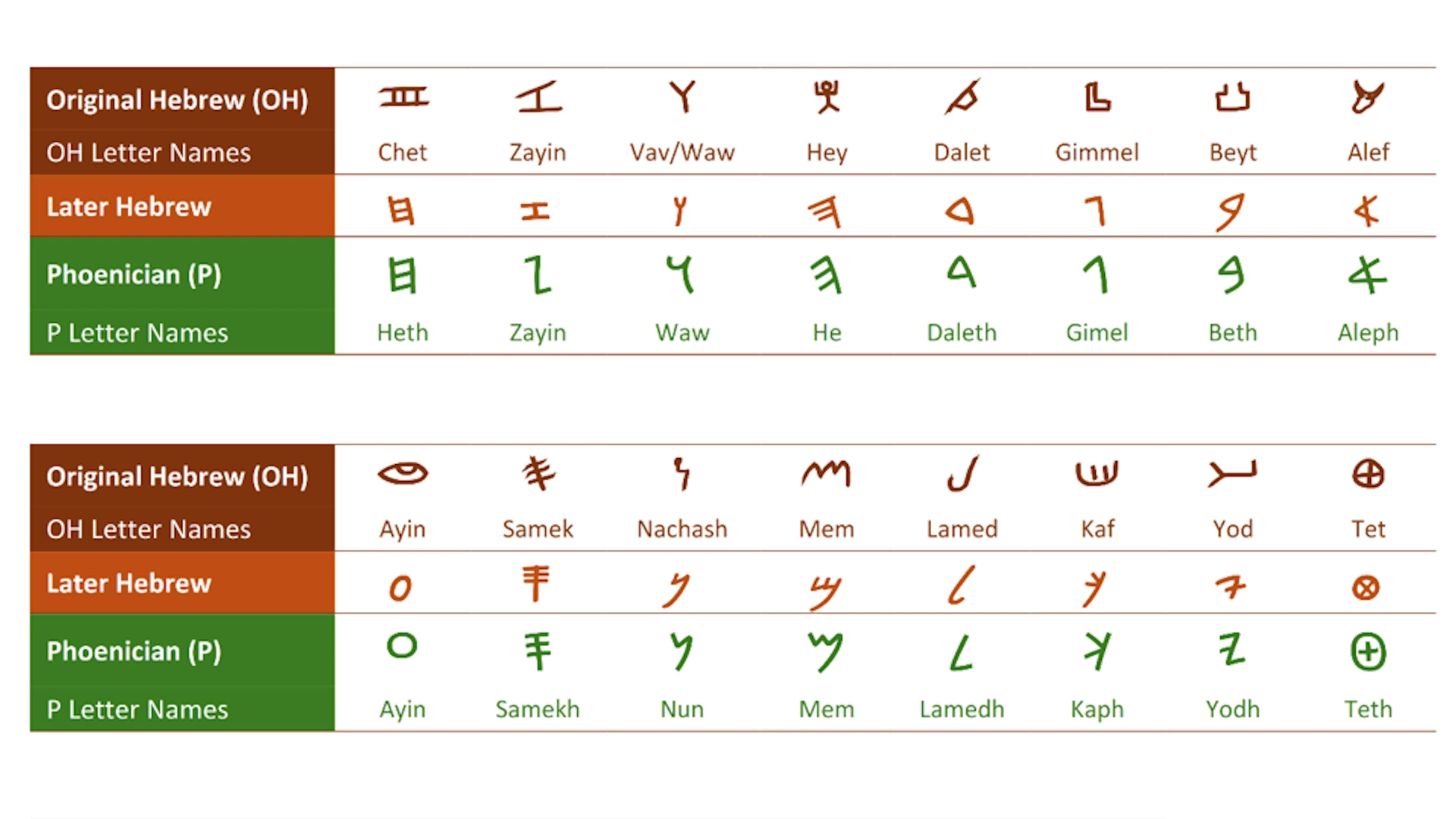
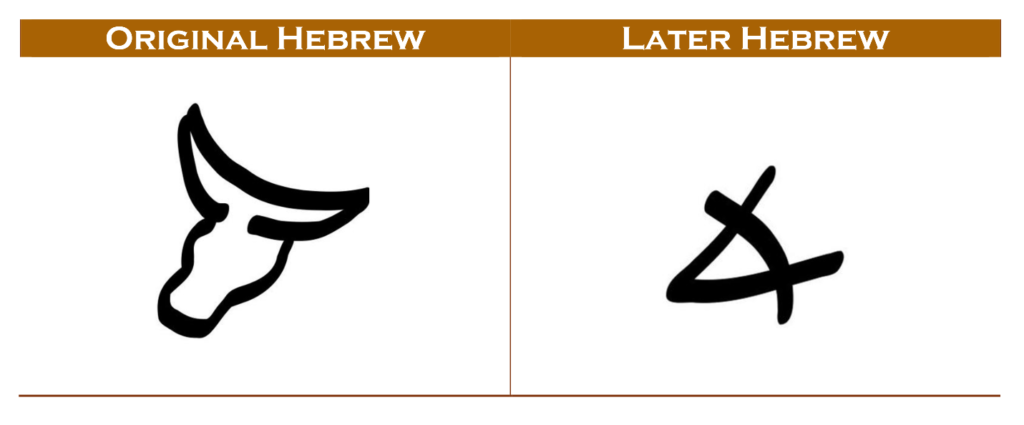
The letter alef for example was originally a picture of a bull with horns. Over time, it became a symbol that somewhat resembled a bull’s head, but was much quicker and easier to draw.
Hebrew letters have names, and as you can see in the comparison chart that follows, the Phoenicians for the most part preserved the Hebrew names, with one notable exception – the letter nachash became nun.
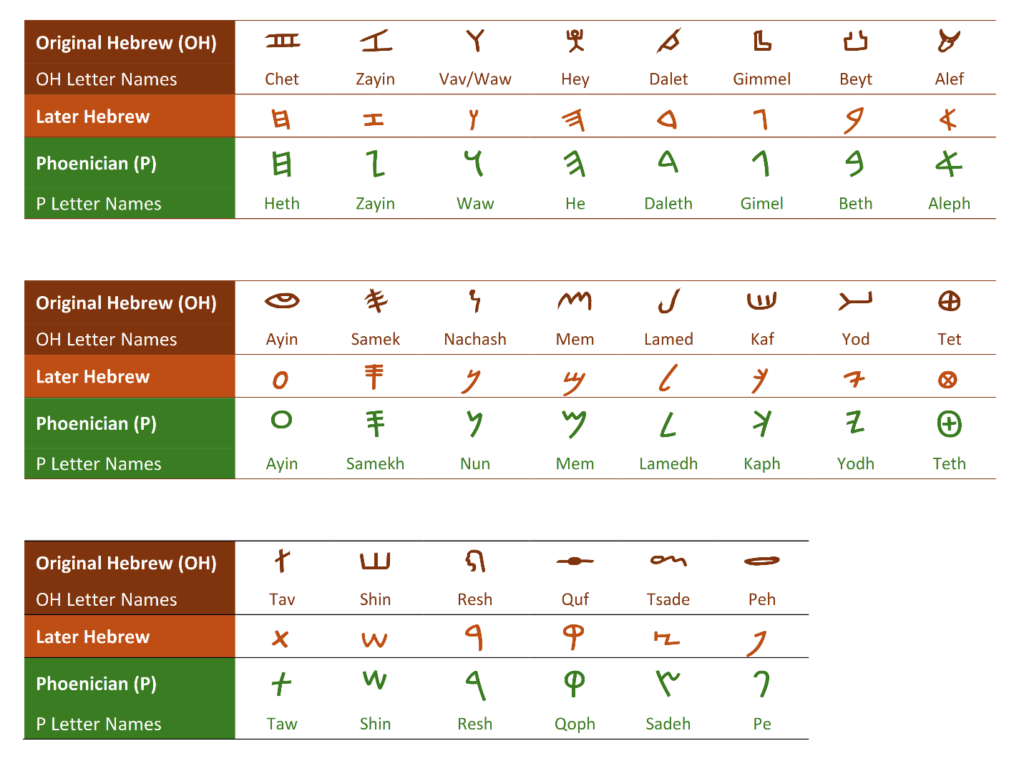
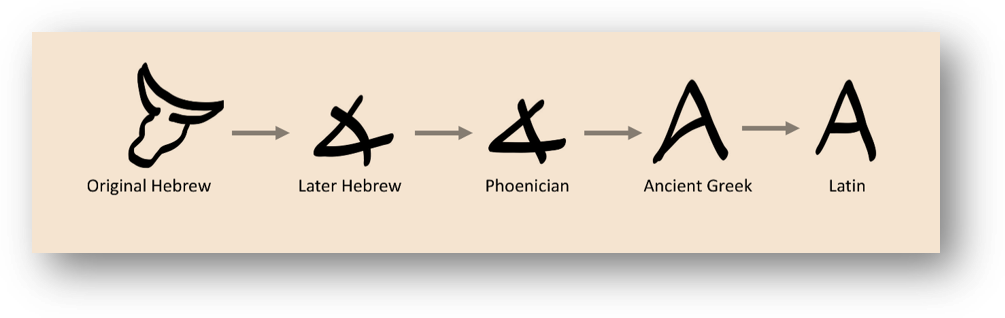
When the Greeks adopted the Hebrew letters through the Phoenicians, they changed alef to alpha and beyt to beta, and it’s from alpha and beta that we get the word alphabet.
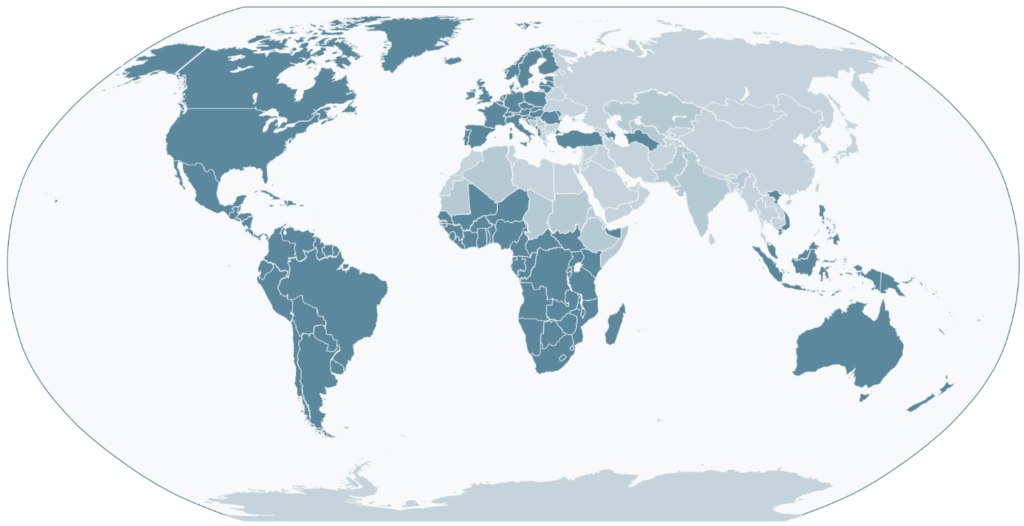
From the Greek alphabet came the Etruscan alphabet, and from the Etruscan alphabet came the Latin alphabet used by the Romans. Today, the Latin alphabet, which ultimately derives from the ancient Hebrew script, is used for English and numerous other languages around the world.
East of Israel, the simplified version of Hebrew morphed into the Aramaic script. Most of the Aramaic letters are unrecognizable from the original pictures, although some letters like shin and zayin maintain some resemblance.
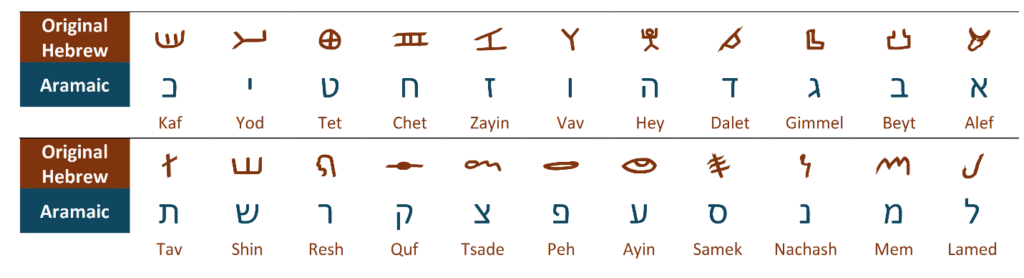
It’s this Aramaic script that people call Hebrew today, so when you look up a Biblical passage in most Hebrew Bibles, you’re looking at it in Aramaic. If you’d like to see the Bible in the Original Hebrew script, we have free downloads for every book of the Old Testament on our website: https://www.fathersalphabet.com/paleo-bible/