A Quick Guide on How to Study Biblical Hebrew Words Using the Original Hebrew Script
Basic Principles
BASIC PRINCIPLE #1 – It’s Father’s Alphabet
The Hebrew language and alphabet were created by GOD. Most other alphabets were created by men to communicate sounds, but that’s not how Hebrew works. The Hebrew alphabet was intelligently designed by GOD our Father in such a way that the original pictographic letters which make up Hebrew words display the meanings of those words.
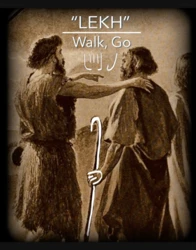
One simple example of this is the Hebrew word for “walk” (lekh) which is spelled Lamed-Kaf. To walk, in Hebrew, is a picture of having a staff (lamed) ל in your hand (kaf) כ
It’s important for us when we study Hebrew to remember that the author of the Hebrew alphabet and language is our Creator – this keeps us grounded in His Word and in the understanding that His Holy Spirit is our Teacher. If you keep this in mind, you’ll see that the meaning of words is often (beautifully) illustrated in Bible verses. We give many examples of this in our videos.
Here’s one example:
The Hebrew word for heart is lev, spelled Lamed-Beyt בל.
Lamed is a picture of a Shepherd’s staff ל and the corresponding Hebrew word lamad means to teach
Beyt in Hebrew is a house ב
The word heart (lamed-beyt) ב לis a picture of a teacher ל who lives in a house ב
This is a great description of the Holy Spirit! YASHUA promised to send us the Holy Spirit as a Teacher who would dwell in us. Ezekiel also prophesied that Father would give us a new heart (a new Teacher inside) and a new Spirit.
“And I will pray the Father and HE shall give you another Comforter that HE may abide ב with you forever… HE dwelleth ב with you and shall be in ב you – the Comforter, which is the Holy Ghost, whom the Father will send in My name. HE shall teach you ל all things…” John 14
“I will give you a new heart ב ל and a new spirit I will put within you.” Ezekiel 36:26
BASIC PRINCIPLE #2 – Individual letters in Hebrew contribute meanings to Hebrew words
Individual letters have established meanings as demonstrated by the use of prefixes in Hebrew.
Example 1 – Beyt in Hebrew is a word meaning “house” and in the Hebrew alphabet there is a letter named Beyt which originally was a picture of a house. As a house is something you live in, the letter Beyt is attached to Hebrew words to mean in.
Example 2 – Vav in Hebrew is the word for the hook that was attached to pillars of the Tabernacle so that curtains could be joined together (Strong’s #H2053, Exodus 26:32, et al.). The letter Vav is attached to Hebrew words to mean and, a word which joins statements together.
The use of the letters Beyt and Vav as prefixes with set meanings helps establish the principles that, in Hebrew:
1) Individual letters have meanings,
2) The names of Hebrew letters preserve the original pictographs of those letters, and
3) The meanings of letters in Hebrew are related to their original pictographs.
Even scholars who don’t believe Hebrew was invented by the Creator will concede that individual letters have specific meanings when used as prefixes, as shown in the examples above. What most teachers and scholars do not yet realize is that those letter meanings 1) relate to their original pictographs, and 2) can be found in all Hebrew words – not just those with prefixes.
A few examples:
The Hebrew letter Mem מ is an easily recognizable symbol for water, and we find this water symbol in the Hebrew words for sea (yam), rain (matar), and other words which have to do with water מ
When you weep, water flows from your eyes, and the Hebrew word for weeping (dama) has the water symbol מ followed by the symbol for a human eye ע
The letter Beyt ב is a picture of a house and Hebrew words for family members like father, son, and daughter all contain the letter Beyt.
The Hebrew letter Peh פ is a picture of a mouth and it’s found in the Hebrew word for mouthful (pat)
The Hebrew letter Nachash נ (often mistakenly called nun) is a picture of a snake. It’s found twice in the Hebrew word for serpent (tannin)
The Hebrew word for snakebite contains the letter Nachash (serpent) נ and the letter Shin (teeth) ש
The Hebrew letter Quf ק is a picture of the sun at the horizon and we find this letter in words related to the sun, such as morning (boqer), east (qadim), and sun-path (tequphah).
The number of examples is beyond coincidence, and each time we study the Bible in Hebrew, we find more and more examples. There are additional examples in this Guide, and numerous examples in the free videos and resources on our website.
BASIC PRINCIPLE #3 – There is only one symbol per letter
For example, the letter Lamed is a shepherd’s staff and nothing else.
BASIC PRINCIPLE #4 – Each letter-symbol has multiple meanings and uses
We will go over this principle later in this Guide. As one quick example, the letter Beyt (house) can mean house, in, inside, among, and with.
BASIC PRINCIPLE #5 – There are no missing letters
One way we know the original Hebrew alphabet consisted of the same 22 letters in use today is by the Psalms. The Psalmist King David was a prophet of GOD who wrote acrostic poems (poems where each line starts with a different letter of the Hebrew alphabet). His Holy Spirit-inspired acrostics contain the same 22-letter alphabet in use today.
BASIC PRINCIPLE #6 – Every word in Hebrew is either a root word or has a simple root word
As an example, the word shem (name) is a two-letter root word in Hebrew. It serves as the root word for shamar (guard), shama (listen), and other longer Hebrew words. When we do Hebrew word studies, we most often look for and examine the root word as the first step. We then see how the letters that are added to the root word influence the meaning of the word. As far as we’ve seen, root words consist of either 2 or 3 letters, with the exception of Father’s Names YHVH and AHYH.
How to study Original Hebrew words
Step 1 – Learn the names of all 22 letters and their corresponding symbols
In the table below, you’ll see the 22 Original Hebrew letters, their symbols, what the symbols represent, and the words in Hebrew that most closely correspond to the names of the letters. For a free chart, click here.
| Name | Letter | Picture | Closest Hebrew words |
| Alef | א | Bull | Eleph: Cattle, Oxen |
| Beyt | ב | House | Beyt: House |
| Gimmel | ג | Camel’s foot | Gamal: Camel |
| Dalet | ד | Door | Delet: Door |
| Hey | ה | Man with his arms raised | He: Behold |
| Vav | ו | Hook | Vav: Hook |
| Zayin | ז | Plow’s edge | Corresponding word unknown |
| Chet | ח | Wall | Chet: Sin |
| Tet | ט | Container | Teet: Mud, clay |
| Yod | י | Arm | Yad: Arm |
| Kaf/Kaph | כ | Palm of hand | Kaf: Palm of hand |
| Lamed | ל | Shepherd’s Staff | Lamad: Teach, learn |
| Mem | מ | Waters | Mayim: Water |
| Nachash | נ | Snake | Nachash: Snake |
| Samek | ס | Barb | Samak: Hold |
| Ayin | ע | Eye | Ayin: Eye |
| Peh | פ | Mouth | Peh: Mouth |
| Tsade | צ | Man on his side | Tsad: Side |
| Quf/Quph | ק | Sun at the horizon | Tequphah: Sun path |
| Resh | ר | Head | Rosh: Head |
| Shin | ש | Teeth | Shin: Teeth |
| Tav | ת | Mark | Tav: Mark |
Step 2 – Learn the common meanings of the letters
Now that you know the objects each letter represents, consider the functions they serve in real life and how those objects are discussed in the Scriptures in order to understand the meanings of these letters in words.
For example, the letter Chet is a picture of a wall. People build walls to safeguard things and to enclose things. A wall also represents the end of a path. In Hebrew words, when you see the letter Chet, it commonly means safeguard, enclose, or end.
The Scriptures teach that wisdom is a safeguard – is it any surprise there’s a letter Chet – a symbol for something that safeguards – in the Hebrew word for wisdom?
As another example, the letter Shin is a picture of teeth. The Bible uses teeth as a metaphor for power (Psalm 58:6, Psalm 3:7, et al.). In Hebrew words, when you see the letter Shin, one common meaning is power. The word for sun, a powerful body in the heavens, has two Shins. You’ll also see the letter Shin used in words to describe powerful things like destruction and earthquakes.
In a lot of cases, studying the English names for the symbols of each letter is very useful. Here are a few examples demonstrating this concept:
- The Hebrew letter Resh is a picture of a head. In English, head is often used to mean leader. For example, the head of a department is its leader. In the Bible, both the letter Resh and the corresponding word rosh are used to mean leader. (Strong’s #H7218, Exodus 6:14, Numbers 1:4, et al.)
- The Hebrew letter Peh is a picture of a mouth. In English, a mouth is often used to mean an opening. You’ll see this in phrases such as “mouth of a cave” and “mouth of a bottle.” In the Bible, both the letter Peh and the corresponding word peh are likewise used to mean opening. (Strong’s #H6310, Genesis 29:3, Exodus 28:31-32)
Here’s a simple word picture using two letters you already know from this Guide: the Biblical Hebrew word patach is often translated as doorway. Patach is spelled Peh-Tav-Chet. A doorway is an opening (Peh) in a wall (Chet).
In many cases since we’ve been studying Father’s words, HE tells us what the word means before we even study it and HE also tells us where to find confirmation in the Scriptures. This is GOD’s language, and His Holy Spirit, as HE said, is here to teach us all things.
In all cases, the meaning of Father’s words is not mystical or hard to understand or learn. In all things, we pray and stay grounded in reality and in Scripture, and we stay away from mysticism.
For your reference, here is a list of common letter meanings (please note that the list is not exhaustive).
If you ever have trouble remembering a letter’s meanings, just think about its symbol – what is the symbol and how is it used in real life and in the Scriptures?
| Name | Letter | Common Letter Meanings |
| Alef | א | Chief, Leader, Leadership, Strong, Strength, Bull, Powerful, Horn (as in power), A symbol for GOD (as our ultimate Chief Leader) |
| Beyt | ב | In, Inside, Within, House, Home, Father’s House (temple), Family, Among, Represents all of creation (as a house that Father built for us), Enclosure, Dwelling, Chamber |
| Gimmel | ג | Lift, Lift up, Walk, Strength, Ability, Foot, Gather |
| Dalet | ד | Door, Gate, Move, Movement, Low, Lowly, Hanging Down, Down, Forth (as in when something comes into view), Enter, Entrance |
| Hey | ה | Look, Lo, Behold, The, This, Reveal, Revelation, Man, Mankind, Men, Existence, Life, Man looking up |
| Vav | ו | And, With, Join, To join things together, Hook |
| Zayin | ז | Cut, Shake, Make ready, Prepare, Now, Overturn, Loosen, Plow |
| Chet | ח | Wall, End, Obstruction, Outside, Stop, Protection, Division, Set apart (as a wall sets things apart), Defense, Safeguard |
| Tet | ט | Surround, Surrounding, Store, Storage, Keep, Contain, Container, Cover, Gather together, Food, Enclose, Hold together, Held together, That which is yours (in that it’s stored and kept by you) |
| Yod | י | Work, Do, Make, Maker, Hand, Arm, Help, Helping, Helping hand, Power, Authority, Create |
| Kaf/Kaph | כ | Hand, Palm of hand, Sole of foot, Crush, Smash, Press down, Push down, Cover, Grip, Grasp, Subjugate, Hold, Give (as in when you hand something to someone) |
| Lamed | ל | Shepherd (as a person), To shepherd (as in to guide), Shepherd’s Staff, Staff, Lead, Guide, Guidance, Teach, Teacher, Protect, To, Toward, Bring, Direct, Learn, Follow, Be led, Listen to |
| Mem | מ | Waters, Sea, Drink, Tumult, Turbulence, Upheaval, Lift up (like waves), Lifted, The unknown, People (as the sea symbolizes people in Bible prophecies), Creation (as all of creation started with the waters GOD hovered over), To cause to rise, Many (as water is, by nature, plural), GOD’s voice (as the sound of many waters) |
| Nachash | נ | Brilliant, Bright, Reflective, Shiny (as snake skin reflects light), GOD-given (as something GOD’s light shines on), Life (as something that has His light without which nothing can exist), To establish (as something GOD-given), Spiritual, Serpent |
| Samek | ס | Hold, Hold on, Hold in place, Establish, Barb, Barbed or thorned plant, Prevent (as in a barb prevents movement), Thorn, Thornbush hedge, Turn (as a thornbush causes people and animals to turn around and be turned back), Protection, Set up, Set in place, Build up, Keep in place |
| Ayin | ע | Eye, Sight, To see, Know, Knowledge, Knowingly, Known, Understanding, Perception, To perceive, Look, Seem, Appear, Appearance (what something looks like), Think, Pay attention, Observe, Time (as time is a type of observation), Experience, Watch, Watch over, Acknowledge, Learn |
| Peh | פ | Mouth, Open, Opening, Edge, Rim, Say, A saying, Command, Speak, Portion (as a mouthful is a type of portion), Entrance, Lip, Lips |
| Tsade | צ | Lie in wait, Lay down, Wait, Waiting, Side, Man lying on his side, Humbleness, Being laid low |
| Quf/Quph | ק | Circuit, Sun, Day, Line, Encompass, Gather, Sun at the horizon, Symbol for GOD (as HE is our light), Light, To rise, Raise, Arise, Establish (as in cause to rise up), Burst forth (as the sun bursts forth from the horizon), Break forth, Go forth, Balance, Equalize, To level, Equilibrium |
| Resh | ר | Man, Mankind, Head, Chief, Leader, Top, First, Begin, Beginning, Began, Strong, Pointed at you, Facing, Set your face against |
| Shin | ש | Teeth, Eat, Front, Consume, Destroy, Power (as the Bible uses teeth to symbolize power), Destructive power, Crush, Grind down, To face, Face frontward |
| Tav | ת | Mark, Marker, Sign, Indicator, Strength, Strongly, Strong indicator, Inscribe (as in making a mark), Signature, Emphasis | Note: this letter also serves to point out and emphasize the meaning of the other letters (literally, it serves as a sign which indicates meanings). For more info on this topic, see our video on the letter Tav. |
This Study Guide is a work in progress. We hope to add to it soon.
If you’d like to learn more, we go through all 22 letters in depth in our Paleo Hebrew Alphabet series – you can watch it commercial-free on YouTube or watch and download episodes free on our website.